
Introduction
One of the best ways to change the look of your kitchen without spending a lot of money on a full renovation is to learn how to paint kitchen cabinets. Cabinets take up a lot of area in a kitchen, and changing their color and finish can affect the feel of the room. You may paint your cabinets to make them seem how you want them to look without going over budget, whether they are old, scratched, or just don’t match your style anymore.
Adding color to cabinets is not the only thing that painting them does. It takes strategy, patience, and the perfect way to do it. Painted cabinets can survive for a long time and look as nice as factory-finished ones if they are done well. Knowing how to paint kitchen cabinets the right way will help you prevent problems like paint that peels, brush marks, and uneven coverage.
This article goes into great detail on every step of the procedure, from checking out your cabinets to putting on the last coat and taking care of them for a long time. If you pay close attention to each step, you may get professional-quality results at home.
How to Paint Kitchen Cabinets: Knowing What Kind of Wood Your Cabinets Are Made Of and What Kind of Paint Works with It
Before you start any project, you need to know what your cabinets are composed of. The type of material affects how the surface reacts to paint and what procedures need to be taken to get it ready. To paint kitchen cabinets, you need to know what you’re working with first.
It’s easiest to paint and most forgiving to paint solid wood cabinets. They take sanding nicely and paint sticks to them well. MDF and other engineered woods have very smooth surfaces, but they need to be primed carefully to keep them from expanding. When properly sealed, plywood cabinets paint beautifully. You can paint laminate cabinets, but you need to do some extra work to make sure the paint sticks.
It’s also important that the paint works well with the surface. Some paints work better on certain surfaces and in certain cooking circumstances. Kitchens get hot, wet, and cleaned often, so they need to last a long time. Choosing the right kind of paint will help your cabinets resist stains, chips, and fading over time.
How to Plan and Set Realistic Expectations for Painting Kitchen Cabinets

To paint cabinets well, you need to have reasonable expectations. It takes more than one day to learn how to paint kitchen cabinets. Depending on how long it takes to dry and how many coats are put on, the process normally takes a few days or a week.
Planning includes determining whether to paint all of the cabinet parts, like the doors, drawers, and boxes. Taking off doors and drawers makes it easier to apply and gives a nicer finish. Putting a label on each component makes sure that everything goes back where it belongs.
You should also think about how often you use your kitchen. Planning meals and temporary storage helps make things easier because cabinets won’t be available while they are being painted and dried. A well-planned timeframe stops people from rushing through their task, which is often what makes things go wrong.
How to Get Ready to Paint Kitchen Cabinets: Tools, Materials, and Space
To learn how to paint kitchen cabinets, you need the correct tools and a good place to work. For both safety and quality, it is important to work in a clean, well-ventilated space.
Protecting floors, countertops, and appliances from paint splatter is part of getting ready. Taking off things like handles and hinges stops paint from building up and makes the finish look cleaner. Cleaning the cabinets well gets rid of grease and other things that can make it hard for things to stick.
The table below shows the main tools and materials needed for painting cabinets and what they are used for.
| Item | Purpose |
|---|---|
| Sandpaper and sanding blocks | Smooth surfaces and remove old finishes |
| Primer | Create a bonding layer for paint |
| Cabinet paint | Provide durable and washable color |
| Paint brushes and rollers | Apply paint evenly |
| Drop cloths | Protect floors and surfaces |
| Screwdriver | Remove and reinstall hardware |
It is best to have all the materials ready before you start so that there are no breaks and the project stays on track.
How to Paint Kitchen Cabinets: Start by Cleaning and Degreasing Them
Cleaning the cabinets well is one of the most important tasks that many forget when they learn how to paint them. Over time, kitchens collect grease, oil, and bits of food. No matter how nice the paint is, it won’t stick to filthy surfaces.
A strong yet safe for cabinets cleanser gets rid of buildup on doors, drawer fronts, and frames. Pay extra care to the areas around the stove and handles, as these are where the most dirt builds up. Before sanding, all surfaces must be totally dry after washing.
If you skip or speed this stage, the paint will often peel or bubble later. A clean surface is the first step to a smooth, long-lasting finish.
How to Paint Kitchen Cabinets: How to Sand for a Smooth Finish

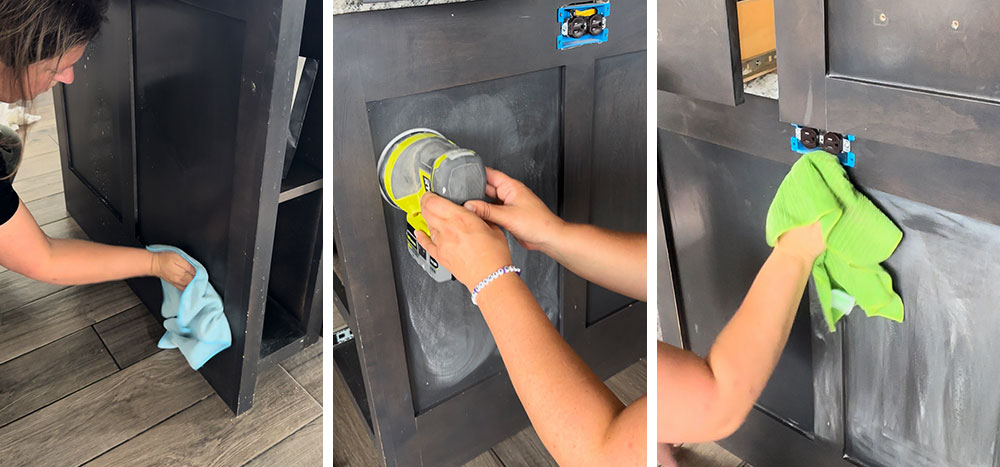
When you learn how to paint kitchen cabinets the right way, sanding is very important. The goal isn’t necessarily to get rid of all the previous paint or stain; sometimes it’s enough to make the surface a little rough so that the primer can stick.
If your cabinets are in decent shape, little sanding will work. You might need to sand more if the surface is shiny or damaged. Be careful while sanding corners and edges so that they don’t get too round.
It is very important to get rid of dust after sanding. Any bits that are still there can make the paint bumpy. Before priming, make sure the surface is clean by wiping it off with a moist cloth or a tack cloth.
How to Paint Kitchen Cabinets: Picking the Right Primer for Long-Lasting Results
When you learn how to paint kitchen cabinets, primer is one of the most crucial things you need. It keeps stains from getting through, makes colors more equal, and helps paint stick better. Not using primer might make the paint uneven and less durable.
Different types of primers work better with different types of cabinets. Wood primers cover up knots and natural grain. Bonding primers are very important for surfaces that are glossy or laminate. A good primer cuts down on the number of coats of paint needed and makes the final look better.
It is very important to apply primer evenly and give it enough time to dry. If you rush this stage, you can have problems with adhesion that don’t show up until weeks or months later.
How to Choose the Best Paint for Kitchen Cabinets
The kind of paint you choose is very important to the success of your project. When you learn how to paint kitchen cabinets, you should choose paint that is made for places with a lot of traffic and moisture.
Cabinet paints are usually tougher and last longer than wall paints. They don’t chip easily and can handle being cleaned often. The finish you choose will change how it looks and how easy it is to keep clean. Satin and semi-gloss finishes are popular because they look nice and are strong at the same time.
When choosing colors, think about the lighting, the size of the kitchen, and the overall design. Small kitchens look bigger with lighter colors, while darker colors give them a powerful, modern look.
How to Paint Kitchen Cabinets: A Step-by-Step Guide to Painting
Preparation pays off when it comes to putting on paint. You need to be patient and pay attention to the little things if you want to learn how to paint kitchen cabinets.
You should put on thin, even layers of paint. Thick coats tend to leak and take longer to dry. A brush for precise regions and a roller for flat surfaces make a smooth finish. Letting each coat dry completely before putting on the next one minimizes smearing and uneven texture.
You need to paint most cabinets at least twice. Some hues might need a second coat to cover everything. Using the same approach on all the cabinet parts makes them all seem the same.
How to Paint Kitchen Cabinets: Drying, Curing, and Putting Them Back Together
Drying and curing are not the same thing. Drying means that the surface is dry to the touch, and curing means that the paint has reached its full hardness. When learning how to paint kitchen cabinets, it’s important to know the difference between these two things.
To avoid blemishes, don’t touch the cabinets while they are curing. You should only start putting things back together after the paint has cured enough to be handled. It can take weeks for the cabinets to fully cure, so be careful with them during this time.
The table below indicates how long it usually takes for cabinet paint to dry and cure.
| Stage | Approximate Time |
|---|---|
| Surface dry | 4 to 8 hours |
| Recoat time | 12 to 24 hours |
| Light use | 48 to 72 hours |
| Full cure | 21 to 30 days |
Giving it enough time makes sure the finish stays smooth and lasts for years.
How to Paint Kitchen Cabinets: Common Mistakes and How to Avoid Them
Mistakes can always happen, even if you plan ahead. To learn how to paint kitchen cabinets, you need to know what not to do.
One of the most typical mistakes is to hurry the procedure. Not cleaning or sanding can make things stick poorly. Thick coats generate drips and an uneven texture. Not paying attention to drying times might leave fingerprints and dents.
To avoid these blunders, you need to be patient and follow each step carefully. Taking additional time to get ready typically saves time fixing mistakes later.
How to Paint Kitchen Cabinets: Tips for Long-Term Care and Upkeep

Taking care of your cabinets after you’ve painted them will make them last longer. In addition to learning how to paint kitchen cabinets, you need also know how to keep them in good shape.
Cleaning gently keeps the finish from getting damaged. Stay away from sponges that are rough and chemicals that are harsh. Cleaning up spills right away stops stains from forming. Cabinet liners keep the inside of cabinets from getting worn out.
Over time, you may need to do little repairs in areas that get a lot of wear. Keeping leftover paint makes it easy to fix things and keeps the look of the paint the same.
Is it Worth it to Paint Kitchen Cabinets Yourself
A lot of people who own homes ask if it’s worth it to learn how to paint kitchen cabinets. The answer depends on how much money you have, how much time you have, and how ready you are to learn new things.
You may save a lot of money by painting your own cabinets, and you can also be creative. It also makes you feel like you’ve done something. But it takes time and care to do it right. People who are willing to meticulously follow each step typically get results that are similar to those of professionals.
Conclusion
There is more to painting kitchen cabinets than just putting on paint. It is a planned procedure that includes getting ready, choosing a product, learning how to use it, and taking care of it. Each step builds on the one before it to make a finish that lasts and looks good.
If you do it right, painting your cabinets can change the look and function of your kitchen. If you take the time to complete the job right, it will look good and last a long time. Cabinet painting is one of the most satisfying home improvement chores you can perform if you do it right.
Read More:- Stunning Blue Kitchen Cabinets: Style, Design, and Trends